

Vice President Vance’s recent comments in Howell about Detroit and his offer to send in the National Guard reflect more than concern about public safety — they echo a long history of racist undertones that portray majority-Black cities as dangerous and ungovernable. This is dog-whistle politics dressed up as public safety.
Detroiters know the truth: crime is a complex and nuanced issue, rooted not in some moral failing of our people but in decades of political, social, and economic neglect. Detroit was isolated, racially and economically, by the population exodus and laws that prevented Black residents from participating in the flight to the suburbs or the wealth it created outside the city. Yet, from this abandonment, our people, organizations, and grassroots leaders have worked tirelessly to build safer streets and stronger neighborhoods, operating from a budget of hope, resilience, and self-determination. At the same time, the current mayor has consistently pushed poverty out of the public conversation, even though more than 35% of Black Detroiters continue to live in poverty. Ignoring poverty while highlighting crime is not leadership — it is misdirection, and it deepens the harm of oppression and marginalization.
Related:
- Yusef Bunchy Shakur reflects on life as he takes on top role for Michigan nonprofit
- Trump cuts hit Michigan violence prevention programs: ‘This will cost lives’
- Detroit crime reduction program in jeopardy
- Residents worry Detroit could be next for Trump troops
To erase that work and frame our city as a place where “crime is allowed to run rampant all over city streets” is not only misleading, it pulls straight from an old racist playbook that weaponizes fear of Black communities. Vance’s remarks, delivered to an overwhelmingly white audience, also fit neatly into the so-called “turnaround city” narrative, one that celebrates development while overlooking the poverty and pain many still endure. His call for the National Guard to come “protect” is not about Detroiters; it echoes the same fear tactics we saw in The Birth of a Nation (1915), a film that glorified racial terror and helped give rise to the Ku Klux Klan. These are dangerous words because they are layered and calculated to reinforce fear of Black people rather than build real solutions for Detroit.
The truth is Detroit has been turning itself around for generations — not because of the current mayor or federal troops, but because of the brilliance, organizing, and endurance of everyday Detroiters: mothers who kept families intact, youth who demanded change, grassroots organizers who built programs out of nothing, and formerly incarcerated men who transformed pain into purpose.
In fact, recent data shows violent crime and homicides are declining. Specifically, 2024 data from the City of Detroit showed overall violent crime is down 7%, nonfatal shootings are down about 25%, and that there were only about 203 homicides – the lowest since 1965 – which is a 19% decline from 2023 and 33% drop since 2022. Proof that local strategies like community violence intervention (CVI) and meeting basic needs of residents are making a real difference. Detroiters have been coming together to meet a range of needs from educational and out-of-school support for youth like Alkebu-Lan Village and Avalon Village, access to fresh food like Feedom Freedom Growers or the Detroit People’s Food Co-Op, access to healthy environments like Michigan Environmental Justice Coalition, to being a mutual aid hub like the Mama Akua Community House. When you reduce Detroit’s story to negative statistics and stigmas, you erase the history and humanity of the very people who have kept this city alive and worked to make this city a safe and resourced place for its residents.
We must be clear: Deploying the National Guard is not a solution. Militarization has never healed communities. If the federal government wants to send resources to Detroit, let it be investments in schools, housing, jobs, and enrichment opportunities for youth, not soldiers with rifles. That is how we cultivate a Beloved Community. Real safety grows from justice, dignity, and shared prosperity, not from troops patrolling our neighborhoods. This is the work Detroiters have carried forward for generations, and it is the mission the Michigan Roundtable for Just Communities has advanced for 85 years.
Detroit is not a problem to be fixed. Detroit is a people who are to be respected. Our progress proves what happens when we invest in us — and we call on leaders at every level to build with us, not stigmatize us. Detroit doesn’t need saving; we are showing the nation what it looks like to build justice from the ground up.
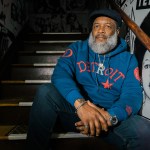
Dr. Yusef Bunchy Shakur is a native of Detroit who walks in the legacy of his mama, whose grit, sacrifices, and love shaped his path. He is the first Black and formerly incarcerated Executive Director of the Michigan Roundtable for Just Communities, an 85-year-old social justice organization. With deep roots in Detroit’s Zone 8 neighborhood, he has spent nearly 25 years transforming his journey from incarceration into a life of activism, education, and building beloved communities. He is also a member of BridgeDetroit’s Community Advisory Committee.
Shakur earned his PhD in Public Policy & Social Change from Union Institute & University and his MSW and BA from the University of Michigan. His award-winning documentary Redemption Road (2024) continues his work of storytelling, healing, and movement building. Guided by his mama’s legacy, Dr. Shakur is redefining what justice leadership looks like in Detroit and across Michigan—rooted in community, resilience, and transformation.
Excellent!!!
Preach Dr!!!
Excellent and so insightful and authentic. Yusef, you are a blessing to the community.
Dr. Shakur, every word is correct, but these people aren’t interested in those facts. Their life purpose is to live in a world with void of anyone and anything unlike them or to live with the different as servants. Best of luck in your new position. I know you will bring an enlightened and fresh perspective to it.