


This story was originally published by Chalkbeat. Sign up for their newsletters at ckbe.at/newsletters.
Mayor Mary Sheffield wants the Detroit Public Schools Community District to use the money it previously spent on city bus passes to expand after-school programs.
But the money freed up in March when Sheffield made bus fare free for all Detroit students would only allow the district to add high-quality after-school programs at three pre-kindergarten through eighth grade schools, administrators said this week.
The mayor’s Ride to Rise program will save roughly $700,000 for DPSCD, Superintendent Nikolai Vitti said during the district’s April board meeting. It would cost $200,000 annually at each school to run programs serving around 120 students, five days a week, with a ratio of 15 kids to one staff member, Vitti said during a board committee meeting Wednesday.
The last time DPSCD explored the idea of paying for after-school programming at each of its K-8 schools was before the COVID pandemic. Vitti said Wednesday that the cost was too high for the district.
“We were looking at $20 million, and that’s why we walked away,” he said.
After the mayor asked DPSCD to consider using the free bus fare money for new out-of-school programs, Vitti said the district did an analysis to determine options with the greatest potential impact.
The district mapped out the current availability of after-school programs and identified schools with high rates of chronic absenteeism and lower enrollment since 2020, said Vitti.
The three schools selected — Ronald Brown Academy and Bow and Marquette elementary-middle schools — were chosen as sites that future investments would likely pay off, Vitti said.
The presentation was the first breakdown of how the district might allocate the funds and was not an official recommendation to the board, which has the final say. It will begin discussing the budget for the next school year at next month’s committee meeting and must approve a budget by the end of June.
Sheffield has made access to after-school enrichment one of her key priorities to improve education and outcomes for youth in the city. Her goal is for there to be a program within a 2-mile radius of every Detroit school. She also proposed $2.2 million in the city’s budget for such programs — an increase of 120% from 2025.
Many families in Detroit and southeast Michigan want their kids to have access to after-school programs, but only about 1 in 5 students do, according to a 2025 survey.
Years of research show after-school programming benefits school attendance, student behavior, and academic performance.
In Detroit, chronic absenteeism is high and academic performance lags behind statewide averages because of systemic barriers.
At the state level, legislators have also increased funds for before and after-school programs. Gov. Gretchen Whitmer recommended increasing the grants to $135 million in the next budget. The state education budget has not yet been approved. The grants are awarded to specific after-school program providers.
Every DPSCD school offers after-school tutoring in literacy and math at the K-8 levels and SAT preparation for high schoolers.
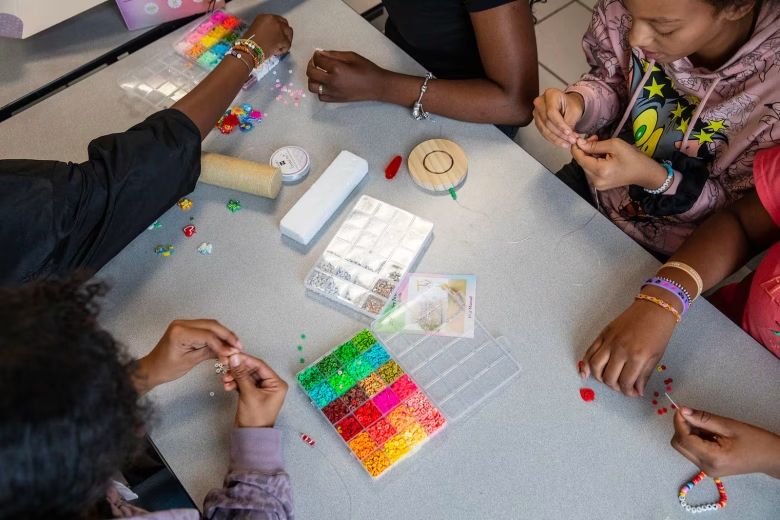
But tutoring does not offer the kind of enrichment, social activities, sports, or social emotional development after-school programming does. Those activities give students opportunities to explore robotics, music, visual arts, and more. Providers say the programs help leverage kids’ interests into academic success.
Some DPSCD schools use their budgets to pay for their own programs, but the district does not allocate specific dollars to pay for them, Vitti said. Organizations also use philanthropic or state grants to offer programs at district schools.
Board Chair LaTrice McClendon asked officials during Wednesday’s meeting to put a call out to community organizations and nonprofits that may be able to provide programming at DPSCD schools.
Vitti agreed, but cautioned there are not many providers in the city with the funding or capacity to expand.
“We did dig into this during the pandemic, and it was disappointing. When you try to ensure for quality and the right number of staff-student ratio and the background to actually do it, there aren’t that many providers,” he said.
Hannah Dellinger covers Detroit schools for Chalkbeat Detroit. You can reach her at hdellinger@chalkbeat.org.
Chalkbeat is a nonprofit news site covering educational change in public schools.