

Editor’s note: BridgeDetroit is a nonpartisan nonprofit newsroom and does not endorse any candidates for public office.
Tragedy in Southwest Detroit
On Monday, Feb. 17., residents in a heavily Spanish-speaking community woke up to a river flowing outside their homes. With temperatures in the single digits, icy water covered cars and flooded residential streets and basements. More than 400 homes lost access to heat and water.
The city quickly sent out the emergency resources that it had on hand, which were police. There was a swift backlash.
After Trump’s inauguration, community members had organized Know Your Rights training sessions to inform our immigrant neighbors of their constitutional right to not open their door to police or ICE without a signed warrant from a judge.
My office had to quickly send out videos and graphics in Spanish for non-English-speaking residents: if you’re in the flood zone, the police are there to help you get to safety.
Once residents knew it was safe to leave their homes, I began calling on community members and organizations. Nonprofit leaders and organizations started to collect resources and set up processes for regular wellness checks as we waited for coordinated response plans from the city.
Impacted residents needed us to unite, and Southwest Detroit mobilized.

Amidst confusion, questions, and frustrations, residents called on their neighbors and friends to confirm their safety. People donated items, made meals, helped translate and interpret, provided transportation, helped wash clothes, and so much more. Our community was at the frontline of emergency response.
The mayor promised that impacted residents would be able to return home within six weeks. For those six weeks, families were scattered across metro Detroit. Some stayed with family or friends; others were provided temporary housing in hotels by the city. Ensuring the safety and protection of those impacted was everyone’s top priority.
While the city wasn’t adequately prepared, it and the Great Lakes Water Authority responded promptly, using every tool to clean basements, remove debris, and repair residents’ hot water tanks and furnaces. However, it was not enough. Many Detroiters lost precious items that held memories, or had their vehicles and basements destroyed. Some lost their housing altogether and will never be made whole.
Unprecedented, but unexpected?
What happened in Southwest Detroit was unprecedented and never should have happened. Unfortunately, though, it will so long as glaring challenges go unaddressed.
The federal government’s disinvestment in our communities has a detrimental impact on our day-to-day lives. Failing to fund infrastructure maintenance and improvements creates unsafe neighborhoods and feelings of insecurity.
How can this happen to 400 occupied residential homes in a city in the wealthiest country in the world? Who is at fault?
Every level of government is. Our local government lacked appropriate emergency response processes with local leaders and partners. Our state government does not adequately invest in our infrastructure. Our federal government is slashing budgets, taking our resources away from the working class, and padding the pockets of billionaires.
Detroiters – a resilient people – have been forced to adapt. After experiencing flood event after flood event, they are growing deep roots in mutual aid and emergency response. Why? Because as long as our government serves the wealthy few over the many, only mutual aid will save us.
Coordination and a culture of care
The question then becomes: how do we create these systems of care?
We need to start with trust and clear communication from trusted messengers.
During the mayor’s address to the city after six weeks of recovery, he mentioned that he wished the city had worked with community members sooner. I could not agree more. From the first day this incident happened, my office organized a daily call with nonprofit leaders and community organizers to discuss issues that impacted residents were dealing with.

Collectively, we also met with residents and conducted needs assessments. We then shared this documentation with the city to increase coordination and ensure a timely response to issues as they arose. We asked the city for accessible, bilingual communications.
On a call with the mayor, after a few weeks of frustrating discoordination between the city and community leaders, I told him we all had the same goal and needed to work together to meet the immense need and build trust with our residents. We could not let politics get in the way of serving people. People were scared and felt lost and in the dark. We needed to increase transparency, communicate in more than just English, and meet people where they were. The administration accepted our invitation to join our collaborative efforts in the second or third week of our daily meetings.
Lessons Learned
Relationships are foundational. We must build relationships during calm times, not only in crisis and chaos. Our relationships need to overcome our politics in times of emergencies. When we know our neighbors, we are invested in their safety and well-being.
Beyond your neighbors, get to know the nonprofits and businesses in your community. Do you know who they are and what services they provide? Do some research and make a list with names and numbers. Begin to get to know them and build meaningful relationships. Our relationships with our neighbors could save our lives one day.
Get information from trusted, verified sources. Timely, factual information is key in emergencies. One challenge during the flood in Southwest Detroit was social media. While powerful in that it can spread messages quickly and hold powers-that-be accountable, be sure the source is trusted and verified. (Misinformation will only create more chaos!)
Looking forward
While the city was not fully prepared, I witnessed city staff working long hours, going above and beyond to meet the public’s needs. New systems were created that will aid response efforts in a future emergency. Building the system in real-time is no easy feat. Amid all the challenges, they rose to the occasion, and for that, I am grateful. We must continue to learn from our emergencies, build relationships, and prepare for the next emergency. Council Member Latisha Johnson, Mary Waters, and I have established a Climate and Disaster Recovery task force to continue to learn from our crises and create community emergency response plans.
I plan to continue investing in and encouraging a culture of mutual aid. I invite you to join me on Wednesday, May 14, from 6-8 p.m. at St. Stephen AME for a Mutual Aid 101 training I am hosting with Detroit Hispanic Development Corporation, Urban Neighborhood Initiatives, Detroit Southwest Pride, and Unity In Our Community Timebank. We will share our experience responding to crises on the ground and our vision for a community centered on care. Register at bit.ly/bpts-register.
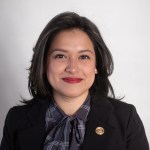
Gabriela Santiago-Romero, MSW (she/her) is the Detroit City Council Member for District 6. She serves on the Budget, Finance & Audit Standing Committee, and is the first Latina ever to chair a standing committee, Public Health & Safety. She’s an immigrant from Mexico and Southwest Detroit native. She is currently running for a second, four-year term.