


This article first appeared in Chalkbeat. Sign up for their newsletters here.

Ajia Phillips sometimes had no choice but to keep her daughter home from school.
On days when she worked 14-hour shifts as a kitchen manager, Phillips couldn’t get to Beacon Elementary School in the Harper Woods School District by 3:10 p.m. dismissal. Traveling by bus also made her arrival time unreliable. And sometimes the cost of the school’s “latchkey” program was too high for the family. As a result, her first grader, Marley Tucker, had to stay home with her aunt or uncle.
“I can’t leave her stranded at school,” said Phillips, who lives in Harper Woods, a Wayne County city that borders Detroit.
Now that Marley is enrolled in the new free Out-of-School Time program at Beacon offered by the nonprofit Sound Mind Sound Body, Phillips said her daughter’s attendance has improved.
Many families in southeast Michigan want their kids to have access to similar programs – but only about 1 in 5 do, according to a 2025 survey released last month by the national nonprofit Afterschool Alliance.
Parents of about 500,000 kids in the region are interested in after-school programs, but only about 90,000 children are enrolled, according to the survey. In Detroit, the need is similar. Parents of about 101,000 children in the city want their kids in programs, while only about 20,000 are enrolled. (Data specific to Harper Woods was not available.)
The findings are based on answers from 1,146 households in southeast Michigan, and the projections made by the nonprofit are based on U.S. Census Bureau 5-year estimates made in 2022.
After-school programming has a number of benefits, including improvements in school-day attendance, student behavior, and academic performance.
In communities like Detroit, where 84% of students come from low-income homes, chronic absenteeism has long been an issue due to systemic barriers, such as inadequate transportation and parents’ inflexible work schedules. Academic performance in the Detroit Public Schools Community District, as well as in city charters and suburban districts where high percentages of Detroit students are enrolled, has lagged behind statewide averages for years.
Mary Sheffield, Detroit’s new mayor, has made after-school access one of her administration’s key priorities.
During her first State of the City address, Sheffield said her goal is to have an after-school program within a 2-mile radius of every Detroit school. She said she will increase the city’s budget for after-school programming to $2.2 million, an increase of 120% from the year before. Her administration has also made bus travel free for all students in the city, and Sheffield said she is advocating for DPSCD to take the money it previously spent on bus passes and direct it toward after-school programs.
Denzel McCampbell, Detroit City Council member representing district 7, said he is working with the mayor’s office to identify how the additional funds could have the greatest effect. He’s heard from existing program leaders and his constituents that not every Detroit family is keyed into the resources available.
“What I’m particularly focused on is how do we reach the kids that we’re not interacting with on a regular basis?” McCampbell said.
Students find motivation, purpose after-school
Bryan Jordan, 16, of Harper Woods, said he didn’t have much motivation to come to school once football season ended.
Now that he’s in the Sound Mind Sound Body, or SMSB, program at Harper Woods High School, Jordan said he has a reason to show up to class ready to learn. The program extends coaching, team building, and mentoring for football players through the rest of the school year.
He and many of his teammates get to school by 6 a.m. for weight training and stay well after the school day ends. They get training on how to apply for college, financial aid, and potential career paths.

“They make it cool to come around, conversate, laugh, have fun, focus on our work, focus on bonding as a team,” Jordan said.
Ray Lanlyons, an attendance agent for Harper Woods, said early data suggests the program has improved attendance for most of the boys.
For the 27 students enrolled in the SMSB program, average daily attendance improved from around 69.2% at the beginning of the school year to 81.7% since the end of January, Lanlyons said.
Curtis Blackwell II, founder and president of SMSB, said the organization’s many programs in 27 schools across the region, including in DPSCD, are designed to leverage kids’ interests to succeed in school — whether it be robotics, video games, sports, music, or art.
“It encourages young people to dream bigger and to feel like school has a meaning,” Blackwell said.
Cost, location are barriers for kids to attend after-school programs
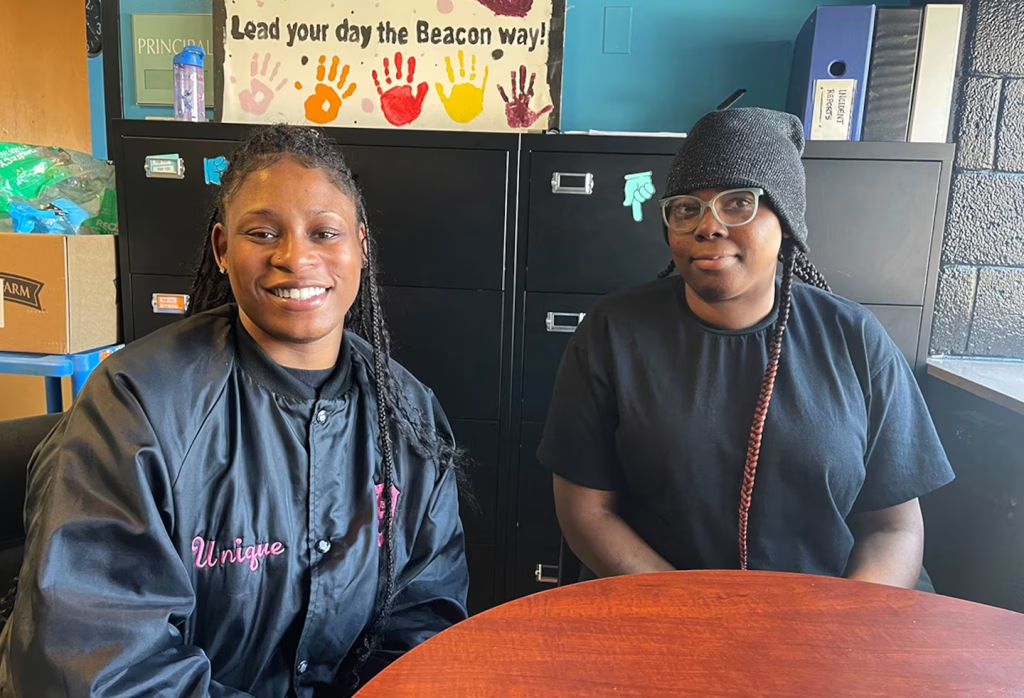
Unique Reid, a Detroit resident whose son attends SMSB at Beacon, said the cost of other programs was prohibitive.
“We try to minimize all the bills that we pay, especially as single mothers,” she said.
The average cost for after-school programs in Detroit is around $98 a week, according to the Afterschool Alliance.
In addition to cost, a lack of availability, not enough safe transportation options, and inconvenient site locations also keep kids out of programs, said Jen Rinehart, senior vice president of strategy and programs at the Afterschool Alliance.
In order to make programs more accessible, Rinehart said the city will need to address all of those factors.
Michigan and Detroit leaders have begun to address some of the obstacles.
Last year, the state allocated $75 million in out-of-school time learning grants – including nearly $4 million to SMSB. Gov. Gretchen Whitmer recommended increasing the grants to $135 million in the next budget.
Though the recent increases have allowed SMSB to expand, Blackwell said his organization doesn’t have enough resources to meet the demand. For example, in Southfield, nearly 120 students asked to be in the program. They were only funded to serve 40, he said.
Some of the city’s plans are to better resource existing programs, said McCampbell.
“What I’m hearing a lot from programs is we would love to do more, we could do that if we had more (funds),” he said.
Another avenue to having a greater effect, McCampbell said, is to find innovative ways to get the word out about existing programs. The city, schools, and community organizations can partner on outreach, McCampbell added.
“Let’s meet folks where they are,” he said. “They may not come to a community meeting, they may not read a newsletter, but they may hang out at the park.”
Hannah Dellinger covers Detroit schools for Chalkbeat Detroit. You can reach her at hdellinger@chalkbeat.org.