

When President John F. Kennedy announced that the U.S. would put a man on the moon by the end of the decade, it was a bold vision, but it was the engineers at NASA who had to realize that vision. In her first Mackinac Policy Conference keynote address as Detroit’s newly elected mayor — and the city’s first female mayor — Mary Sheffield offered her bold vision: poverty elimination is a growth strategy.
Now, how do we realize that?
Mayor Sheffield may have intended to show the business community that reducing poverty will improve profitability, productivity and regional growth. From an economic perspective, however, the argument is even stronger: underinvested communities are not simply places of need; they represent investment opportunities.
Investment will produce high returns in neglected areas. That logic applies not only to low-income countries, but also to undercapitalized neighborhoods in Detroit. If capital were flowing properly, investors would see enormous opportunity in these communities. If returns are high in underinvested places, why does investment fail to flow there?
For the answer, we turn to Daron Acemoglu, MIT professor and Nobel Prize-winning economist, who emphasizes that strong institutions — financial systems, legal protections, and governance structures — are essential for economic development. When institutions are weak, investment does not flow, even where need and opportunity are obvious.
That is the problem in many low-income countries and in too many underdeveloped areas of Detroit. The issue is not simply a lack of capital. The deeper issue is a breakdown in the institutions that connect capital to people, businesses and neighborhoods that could put it to productive use.
Realizing Mayor Sheffield’s vision will take more than high-profile media events. Engineering a solution requires a paradigm shift in how we approach poverty, development and investment.

Over several decades, policymakers in both parties have relied on versions of trickle-down economics. The packaging changes, but the logic remains the same: subsidize big projects, attract outside capital, support large developers and hope the benefits reach working families and low-income neighborhoods.
Detroit knows this pattern well. Downtown development has accelerated while neighborhoods continue to struggle. Residents remain disconnected from the wealth created around them. Public dollars often help finance development while the equity — the actual ownership and upside — accrues to private developers, not to the low-income households those investments are supposed to benefit.
At the same time, our traditional anti-poverty system is built largely around consumption. The U.S. spends more than a trillion dollars annually on social assistance programs, enough to start a top-five global asset management firm every two years. These programs help families meet basic needs such as food, housing, healthcare, etc. They are necessary. People need to eat. Families need shelter. Children need stability. Subsidizing consumption, however, does not build wealth.
A system that gives people just enough to remain poor, but not enough to build assets, will never eliminate poverty. It will only sustain it.
In Detroit, poverty has consistently remained above 30 percent, with 80 percent on the Eastside. That does not mean we should abandon public responsibility; it means we need a better model. Low-income households need access to the same wealth-building mechanisms that middle- and upper-income households use every day: savings, ownership, equity, investment and asset appreciation. Too often, they are told to work harder but not given access to capital; encouraged to support local businesses but rarely allowed to own a piece of them; asked to believe in Detroit’s comeback but denied a share of the returns.
As a PhD candidate in economics at UM, a member of the Detroit City Council’s Economic Development Task Force, and a lifelong Eastside resident, I have worked with colleagues at the UM Ross School of Business Detroit Neighborhood Entrepreneurs Project, ProsperUs Detroit, and the National Coalition for Community Capital on an innovative poverty solution: the Detroit Residents’ Investment Fund, or iFund.
The iFund is a resident-owned investment fund designed to reduce poverty by expanding access to investment opportunities for low-income households while revitalizing local small businesses with flexible capital. The idea has gained traction, with Detroit City Council allocating $300,000 in Fiscal Year 2026 for research on a pilot program in District 6. The concept is simple: allow Detroit residents, particularly low-income residents, to collectively invest in local small businesses and startups. The fund pools resident capital to purchase equity in neighborhood businesses. As those businesses grow and generate profits, resident-shareholders receive dividends and build wealth.
Instead of development happening to communities, development happens through communities. Residents own part of the growth they help create. This model solves two problems simultaneously. Detroit’s small businesses need flexible, non-extractive capital that helps them grow without crushing them under debt. Detroit residents need access to wealth-building, so they are not just consumers but investors with a financial stake in local business success. That creates a powerful feedback loop. Residents invest in local businesses, incentivizing them to shop locally. Stronger demand improves business survival and growth, strengthening return on investment and wealth creation for residents. The community becomes more stable, and the city’s fiscal position improves as businesses generate profits, jobs and tax revenue.
This is what poverty elimination as a growth strategy should look like.
The public policy implications are significant. Instead of public funds subsidizing development where private investors capture the equity, the government subsidizes low-income residents in purchasing equity in local businesses, reducing their reliance on government support. Tax revenue generated by growing businesses offsets the subsidies.
The long-term goal is an anti-poverty strategy that can become revenue-neutral, or even revenue-generating. If local businesses grow, they create jobs and tax revenue. If residents build wealth, their reliance on government assistance declines. Government can reduce public assistance expenditures while gaining revenue from stronger local economies. That is a hand up, not a handout, as Barry Goldwater once said.
Mayor Sheffield’s statement on Mackinac Island was important because she said what many economists, neighborhood leaders and residents have long understood: Poverty elimination is not just a moral imperative; it is an economic opportunity. If Detroit wants to rise higher, it does not need another strategy that asks low-income residents to wait for prosperity to trickle down. It needs a model that powers growth by empowering those historically excluded from it.
In the more than half-century since JFK asserted, “We choose to go to the moon,” it has been too often lamented that we can figure out how to play golf on the moon but not solve poverty on Earth. Perhaps Detroit is in prime position to take one small step for its people but one giant leap for mankind.
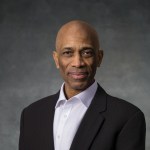
Toinu (Toy-new) Reeves is a PhD candidate in Economics at the University of Michigan with a focus in macroeconomics, international trade and finance, currently researching local option sales taxes. He serves on the City Council’s Equitable Development Task Force and is presently a candidate for State Senate in District 3.
This is little more than a clever word play. Assisting low income people to “build equity” sounds wonderful but when in the future those same people need to sell that equity to buy groceries or pay bills then you are right back to square one. The answer is for the private sector to build places for people to work and be gainfully employed. Those places then need to actually “make” something and sell the same at a profit all without government assistance. As always the best chance we will ever have will be when government just gets out of the road.
I appreciate the lens of looking at poverty elimination as more than a moral obligation. However, this approach still centers economic growth rather than the humanity of those in the communities who have been disenfranchised. While it is important to focus on how people can build equity that they have been historically denied, I think it is important to employ an approach that centers the health and well-being of the individuals within the community rather than just the economic health. Building equity does not necessarily address the health costs of living in a neighborhood with high levels of poverty, but it can and it should since the health of residents is related to their ability to participate in the economy.
I also like the community wealth building strategies that come out of creating local businesses to meet the needs of our anchor institutions like they did in Cleveland. The workers are local residents who also are co-owners. https://www.evgoh.com/about
A Detroit organization is doing the wealth building that I described above. See the center for community based enterprise at https://www.linkedin.com/company/c2be/
The fund you mentioned kinda sounds like what the Boston Ujima Project is operating. A democratically-governed and community-owned investment fund. I’ve been so interested in seeing how one of these could operate in Detroit. Very excited to learn more about the model you’re testing!
Greetings, as a long time Detroiters and concerned about the high poverty in Detroit, which has been ignored for decades. I agree with Toinu Reeves comments. We as majority black legacy Detroiters have the solutions to poverty and other issues which have been a factor. Increase and advertise the free job training and increased the living wage in Detroit. Quality accessible housing must be affordable to a majority black budget.
“If Detroit wants to rise higher, it does not need another strategy that asks low-income residents to wait for prosperity to trickle down. It needs a model that powers growth by empowering those historically excluded from it”.