
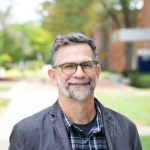

The first panel discussion in the Workshop of Democracy series focused on urban agriculture and food sovereignty, and featured Malik Yakini, Ru Colvin, Dolores Perales, Jeremy Moghtader and Patrice Brown. It was moderated by Bryce Huffman from Bridge Detroit.
The event began with a short crash course video in urban agriculture prepared especially for the occasion. It included references to terms such as “food desert” and “food swamp” that were used in the early 2000s to describe environments without access to affordable healthy food on the one hand, and with abundant access to high-calorie junk food on the other. Detroit, with its starkly racialized urban-suburban divide, became a poster child for disparities in food access. Urban agriculture was one of the strategies employed by Detroiters to address this inequity, and Detroit soon became recognized as a global leader.

The goal of this workshop series is to highlight the community-based strategies and solutions developed by grassroots Detroiters in response to key challenges the city has confronted in the last twenty years. Hosted by the UM Detroit Center and funded by UM’s Initiative for Democracy and Civic Empowerment, the series showcases community leadership and innovation rather than academic expertise. The range of panelists of different ages and backgrounds produced a rich discussion that highlighted the diversity of urban agriculture-related experiences as well as some common themes.
To open the panel, Huffman asked participants to recall what Detroit was going through in 2005. Ru Colvin was only a school-aged child at the time, but she had strong memories of “moments of bliss” associated with her grandmother’s East Side garden, contrasted with the abandoned buildings of the “Red Zone”, Detroit’s 48205 ZIP code, where her family lived. As a college student, she worked for the 2010 US Census and was assigned to survey her own neighborhood. “I was like, ‘what am I supposed to survey?’ There is nothing but blocks of land…that’s one of the first moments when I started to get curious and I wanted to understand.”

Colvin’s child’s-eye view of the 2000s was fleshed out by the account of Malik Yakini, who highlighted the systemic nature of the crisis that was occurring in Detroit. He began by pushing back against the term “food desert”, “because a desert is a natural ecosystem, and what’s going on with the food system is anything but natural.” He explained that by 2000, most of the local grocery stores had closed their doors or were gone, and there were other stores opening up, “that weren’t owned by people of our community, that were part of an extractive economy.” He helped found the Detroit Black Community Food Security Network, or DBCFSN, in 2006 as a response to this challenge.
Dolores Perales-Lara and Patrice Brown shared their different personal stories of engagement with urban agriculture, which illuminated the pathways built by those working in the trenches. Perales-Lara started as a volunteer at Cadillac Urban Gardens, eventually involving her younger brothers and her mother as well. Brown had worked in politics and at UM before becoming a Food and Health Fellow at Eastern Market. Now, Brown is deputy director of sustainability and director of urban agriculture for the City of Detroit, while Perales-Lara is now co-executive director of Cadillac Urban Gardens and works for the Detroit Planning Commission. Like Colvin, Perales-Lara talked about her growing awareness of structural issues, saying, “I remember walking to a liquor store and getting bread, milk and eggs, because that’s all we could get, and we had to walk over a mile because we didn’t have a car. There needs to be change so there isn’t another mom going through what my mother had to go through.”
Brown emphasized the importance of residents being involved with city government, and learning how to make use of city ordinances. She outlined some of the policy obstacles and goals: “Can farms produce enough to feed their own families and their own blocks, and still sell – we need to connect the dots. Now it’s time for the city to make a bigger commitment to not just urban farms but other green spaces. I am hopeful for what our farm community can do.”

Jeremy Moghtader became connected with Detroit’s urban growers through organic farmer training programs that he ran, first at Michigan State University and later at the University of Michigan. He discussed the approach that he has taken with UM, stating, “systems change is hard, pathways aren’t always clear, if you want to be a creative change agent, you have to kind of figure that out. How does an institution co-create non-extractive systems? What I say repeatedly is, if you are going to engage with the community, you have to do it in this particular way.”

When asked what advice they would offer to incoming Detroit Mayor Mary Sheffield, the panelists reinforced the necessity of planners and policymakers following the leads of community residents who are working to build equitable and resilient systems and have the experience on the ground. Moghtader encouraged both residents and institutional partners: “Participate, engage, connect–make it happen.”

JOIN US
Workshop of Democracy: Community Benefits, Community Land Trusts, and Equitable Economic Development
- Hear case studies from Detroit neighborhoods on how these models can work elsewhere. We’ll look at Community Benefits Agreements and Community Land Trusts as ways to keep housing affordable and reduce inequality. Workshop of Democracy: Join us for a dynamic series of panels and workshops showcasing how Detroiters have responded to 21st century challenges, developed innovative strategies and driven policy change—offering inspiring examples of grassroots power in action.
- Location: 3663 Woodward Avenue, Suite 150, Detroit, MI 48201
- Date and time: Thursday, Jan. 15, 2026 10 a.m. – 12 p.m.
- Organizer: University of Michigan Detroit Center, (313) 593-3584, detroitcenter@umich.edu
- Reserve your tickets here