
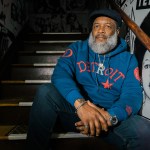

As Detroit enters a crucial mayoral election cycle, we find ourselves once again at a familiar crossroads — being told that Detroit has been “turned around,” as if decades of disinvestment, redlining and systemic abandonment can be erased by cranes in the sky and corporate tax breaks. That story hovers over this mayoral race like a cloud.
But for those of us living far from the gleam of downtown, the real question remains: who has Detroit been turned around for?
This is the burning question many Detroiters hope the next mayor will finally answer. Over the past decade, we’ve watched billions of dollars flow into downtown, what many now jokingly call “Gilbert-Town.” Not just because of the skyline, but because of the monopoly-like grip one billionaire (Dan Gilbert) has on the city’s priorities. Areas like Midtown, Corktown, and New Center have received massive investments, attracting an influx of white residents and businesses designed to serve them. White-owned businesses got tax breaks. Stadiums owned by billionaires received public subsidies.
Meanwhile, in the neighborhoods where most Black Detroiters live? We got disinvestment, gentrification, displacement, housing instability and over-policing. The result is a lopsided city that holds two different realities: one white and well-resourced; the other Black and left to survive under systemic neglect.
This didn’t happen by accident. It’s the result of intentional policy decisions — rooted in systemic racism and classism — carried forward by the current administration. So, we must ask: Will the next mayor have the courage to confront this legacy and reverse the economic abandonment of Black neighborhoods? In a city that is 77% Black, it should not be considered radical for candidates to speak openly about Black pain or Black potential. We need leadership that speaks from the margins, not just about them.
Let me be honest, in more than a decade in office, the current mayor has refused to center poverty in his agenda. He has even publicly stated that he wouldn’t talk about it. But in a city where the poverty rate exceeds 30% — nearly triple the national average — that silence is not neutral. It’s violent. Because that’s what poverty is, it’s anti-Black and reflects a profound disconnect from the lived experience of everyday Detroiters.
When we look even deeper, we see that over 60% of Black households in Detroit are led by Black single women, according to data from the Statistical Atlas. These women are raising children, anchoring neighborhoods, and holding our communities together— often without adequate support from the very institutions that claim to represent them.
These women aren’t just “holding it down,” they’re strategizing our survival every single day. They are the quiet architects of our households and our future. Any mayor serious about building an equitable Detroit must begin by investing not just in Black neighborhoods, but in Black women. Not as an afterthought, but as the foundation.
This isn’t about identity politics. This is about shifting power. About repair. About responsibility. About transformation. And yet, in a city that is overwhelmingly Black, it’s still considered risky for candidates to speak directly to Black needs.
That’s not strategy — that’s anti-Blackness.

So, who will have the courage to change that? Detroit deserves a mayor who overstands that housing is a human right. That real safety comes not from surveillance or punishment, but from healing, opportunity and collective care. That Black neighborhoods, Black women, youth and elders are not burdens, they are the backbone of this city. And that poverty is not a stain to avoid, it is a crisis that demands bold, urgent solutions.
We don’t just need change. We need transformation. We need a mayor bold enough to say: Our neighborhoods deserve to thrive, not just survive. It cannot just be a campaign slogan, it must be a blueprint for action. Because democracy doesn’t start at the top. It starts at the bottom, with those who have been given the least and yet continue to give the most.
Whoever steps into the mayor’s office next will inherit a city that is both deeply fractured and deeply powerful. The question is: Will they uphold the status quo, or will they lead with the vision, accountability and imagination this moment demands?
Detroit doesn’t need another savior from above. We need leadership rooted in our neighborhoods as much as in downtown. Rooted in the people. Rooted in the spirit of beloved community, where justice is not just a talking point, but a daily practice. A lived promise that none of us will be left behind.
And if you need proof of how urgently this leadership is needed, just listen to the last mayoral debate held in the city prior to the one at the Mackinac Policy Conference on May 29, 2025. You could hear it in the voices of residents shouting from the audience — voices filled with pain, frustration and a deep hunger for change. They weren’t just heckling. They were testifying. Testifying to decades of neglect and demanding a mayor who will finally listen, and act, to make their neighborhoods whole.
Dr. Yusef Bunchy Shakur is the Executive Director of the Michigan Roundtable for Just Communities, becoming the first Black and formerly incarcerated leader in the organization’s 85-year history. A Detroit-born organizer, author, and filmmaker with a Ph.D., Shakur is leading the Roundtable into a new era centered on building just and beloved communities rooted in transformation and collective power. His critically acclaimed documentary, Redemption Road, has received national and international recognition. He also serves on BridgeDetroit’s Community Advisory Committee.
To whom it may Concern,
I am one of those black families and I can speak for almost every single single woman in Detroit feels alone at times and it can be really hard to get through those tough times but with those tough times we have our community to help us, especially since I gave birth to my last child my family that I thought I knew kept abandoning me and leaving me to deal with things on my own which led me to have to rely on the city of Detroit and the state of Michigan for assistance because of lack of familial support. We need a team of woman and men equal to be able to run Detroit because it is a great city, it holds our heritages and cultures. We need people who really care about Detroit and not another year from around 2008. We can be strong as a community and we having amazing people who are capable of doing the job no one else wants to do. I truly believe those leader are in our city and they know it and they want to do great things because this is our home. I respect it and I know someone is waiting to be in the political sector. Someone that knows the language of Detroit which is our Motown.
This piece is short on substance and facts.
The reality is there are few neighborhoods in Detroit that have not materially improved in the last decade, both in terms of upkeep, maintenance, home value, etc. I’ve seen it with my own 2 eyes; Islandview and East Village- which for decades was pretty scary in terms of its degree of abandonment and decay – are valuable neighborhoods. The North End. Same deal.
It’s not just there. Homes getting renovated in McDougal-Hunt, in Dexter-Linwood, in Morningside, heck even in Brightmoor… You can materially see the difference in 10 years. Commercial corridors are doing pretty decent on West McNichols, East Warren, etc.
It’s not all perfect, and there are parts of the City that are still very depressed such as the northeast sector. I wonder what solutions the author has for such a systemically dis-invested area?
I think there’s a risk of homogenizing largely systemic, macroeconomic issues with City of Detroit policy/mayoral issues. I do think that there’s room from improvement from city government in listening-to and addressing resident needs. However, to paint the last 10 years as being “a tale of 2 cities, one white one black” is oversimplified and trite.
You’re a breath of fresh air bro. 🫡
Great article! Black people deserve a pro-Black mayor who invests in the people. Downtown always receives investments but that’s not even a quarter of the community. And the family of Porter Burke’s shouldn’t have had to bury their son; the cops shouldn’t be going after people with mental health needs.